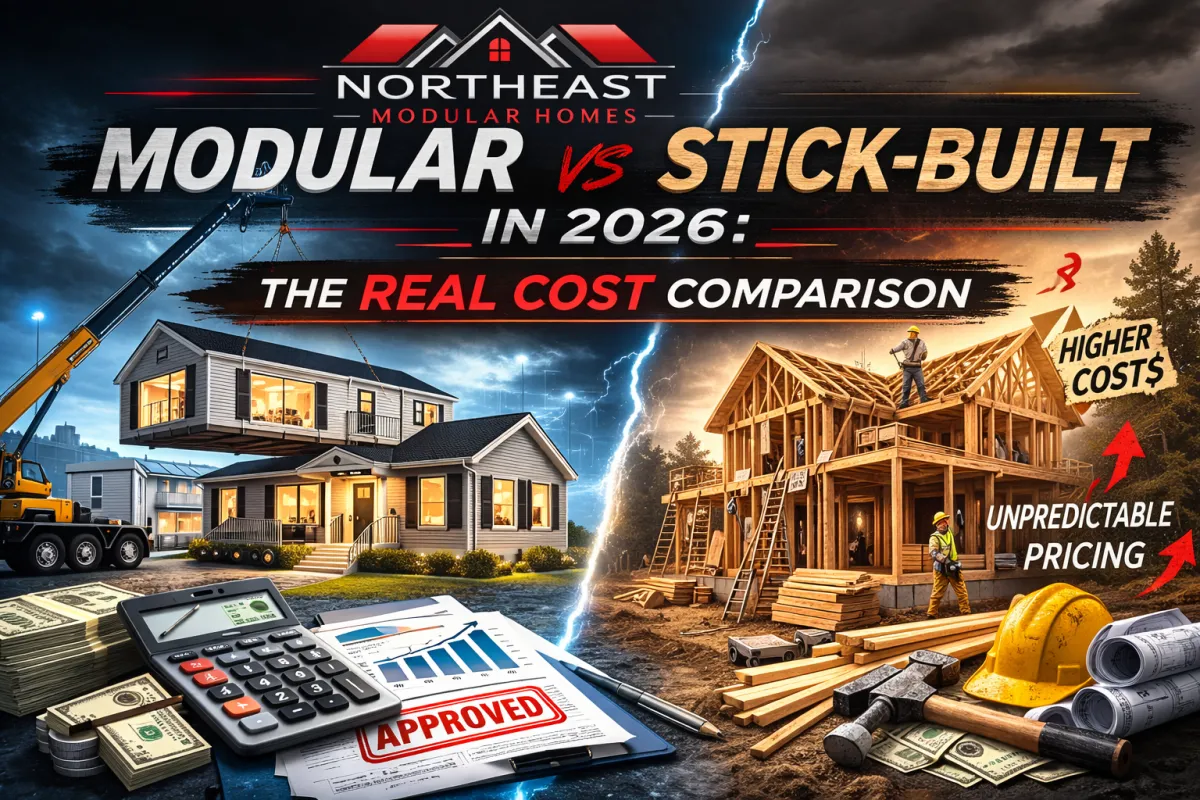
Modular vs Stick-Built in 2026: The Real Cost Comparison
If you're planning to build a new home in 2026, one of the first decisions you'll face is whether to build modular or stick-built.
Many people assume modular homes are significantly cheaper than traditional construction. The reality is more nuanced. Today, the cost of modular and stick-built homes is often quite comparable, especially when looking at finished turnkey homes.
However, the real advantages of modular construction often come from time savings, construction efficiency, and reduced financing costs, which can make a meaningful difference in the overall project.
Let’s break down how the two methods compare.
Understanding the Two Construction Methods
Before comparing pricing, it's important to understand how each home is built.
Modular Construction
Modular homes are built inside a climate-controlled factory in sections called modules. These modules include framing, insulation, drywall, electrical wiring, plumbing, kitchens, and bathrooms.
Once the modules are completed, they are transported to the property and set on the foundation using a crane. Local contractors then complete the remaining work, including finishing drywall seams, connecting utilities, and completing exterior finishes.
Because the majority of construction occurs indoors, the building process is highly organized and less affected by weather or subcontractor delays.
Stick-Built Construction
Stick-built homes are constructed entirely on-site from the ground up. The framing, roofing, electrical work, plumbing, insulation, drywall, and finishing work all happen outdoors on the job site.
This process involves coordinating multiple subcontractors and is more vulnerable to weather delays, scheduling gaps, and material exposure.
Stick-built construction is still very common and allows flexibility in design, but the process can take longer depending on conditions.
Cost Per Square Foot in 2026
One of the most common questions people ask is:
“What does it cost per square foot?”
In Northeast Pennsylvania and surrounding areas in 2026, typical ranges look like this.
Modular Homes (Turnkey)
Complete modular projects often fall within:
Basic Builder Grade Construction
Approximately$175 – $225 per square foot
This typically includes:
• The modular home built in the factory
• Delivery of the modules
• Crane and set crew
• Foundation
• Mechanical connections
• Interior finishing
• Site preparation
Of course, site conditions, finishes, and land requirements can influence final pricing.
Stick-Built Homes
Traditional stick-built homes in the same regions typically range from:
$200 – $260+ per square foot
Higher-end custom homes can exceed these numbers depending on design complexity and finish selections.
As you can see, the overall construction costs between the two methods are often relatively close.
Where Modular Construction Often Saves Money
While base construction pricing may be comparable, modular homes often provide advantages in other areas.
Faster Construction Timeline
One of the biggest differences between the two methods is how long the project takes.
Modular Homes
Factory construction typically takes:
6–10 weeks
At the same time, site work such as excavation and foundation installation can occur simultaneously.
After the home is delivered and set, final finishing work usually takes several more weeks.
Total timeline:
Approximately 3–5 months
Stick-Built Homes
Stick-built homes often take:
7–12 months or more
This is largely because each stage of construction must occur sequentially and depends on subcontractor availability and weather conditions.
Savings on Construction Loan Interest
Because modular homes are typically completed faster, homeowners may reduce construction loan interest costs.
Every additional month a project takes means additional interest payments on construction financing.
For example, a project that finishes several months sooner may save thousands of dollars in interest expenses and carrying costs.
It also allows homeowners to move into their home sooner, which can reduce temporary housing expenses.
Structural Strength of Modular Homes
Another lesser-known advantage of modular construction is structural strength.
Because modules must be transported on highways and lifted by crane, they are engineered to withstand significant stress during transport.
As a result, modular homes often use approximately 20% more framing lumber than comparable site-built homes.
This additional structural reinforcement helps ensure the modules remain stable during delivery and installation.
Many homeowners are surprised to learn that modular homes can be extremely strong and durable structures.
Quality and Building Standards
Modular homes must meet the same building codes as traditional homes in the state where they are installed.
They also undergo multiple inspections during factory construction.
Because materials are stored indoors and construction occurs in a controlled environment, factory building can also help reduce issues related to moisture exposure during construction.
Why Many Buyers Are Choosing Modular in 2026
Today, many homeowners are choosing modular construction not because it is dramatically cheaper, but because it offers a more efficient and predictable building process.
Key benefits include:
• Comparable overall construction costs
• Faster build timelines
• Reduced weather delays
• More predictable scheduling
• Strong structural construction
• Earlier move-in dates
For many families building on their own land, these factors make modular construction a very attractive option.
The Bottom Line
In 2026, the cost difference between modular and stick-built homes is often smaller than many people expect.
Both methods can produce beautiful, high-quality homes. However, modular construction can offer advantages in construction speed, scheduling predictability, and financing efficiency.
For homeowners looking to build efficiently while maintaining control over timelines and costs, modular homes are becoming an increasingly popular choice.
Thinking About Building in Northeast Pennsylvania?
If you are considering building a home, the team at Northeast Modular Homes can help you understand the process and explore the options available for your land and budget.
We’re happy to answer questions, review plans, and help you take the next step toward building your home.
📞 Contact Modular Mike from Northeast Modular Homes to learn more about the modular building process.
www.NortheastModularHomes.com
